May You Live
Until 120
A distinctly Jewish wish for a long life connects everyday conversation to Moses, the Talmud, and centuries of rabbinic commentary.
Written by


In Jewish culture, 120 is more than an age. It is something people actually wish for one another.
The Hebrew expression ad me’ah ve-esrim literally means “until 120.” It is a longstanding Jewish wish for a long life, rooted in the Torah’s account of Moses and still used today. If you did not grow up hearing the phrase, you are not alone. Its familiarity varies widely across Jewish communities. That makes it an especially interesting cultural marker. Three simple words connect everyday speech to biblical memory, rabbinic interpretation, and centuries of Jewish life.

One Sunday, near the end of my fifth-grade class at Temple Israel in Tallahassee, Florida, the discussion turned to the extraordinary ages recorded in the Torah. Moses lived to 120, Sarah to 127, and Abraham to 175. The students were skeptical. Could people really have lived that long? Several wondered whether a biblical “year” might have meant something shorter than a modern one.
The biblical number
Moses, but not only Moses
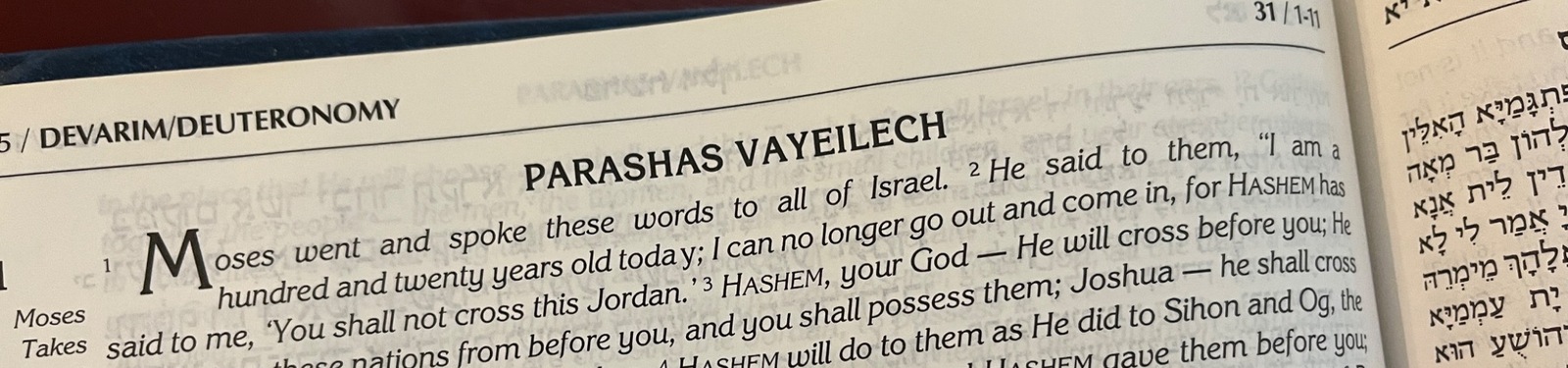
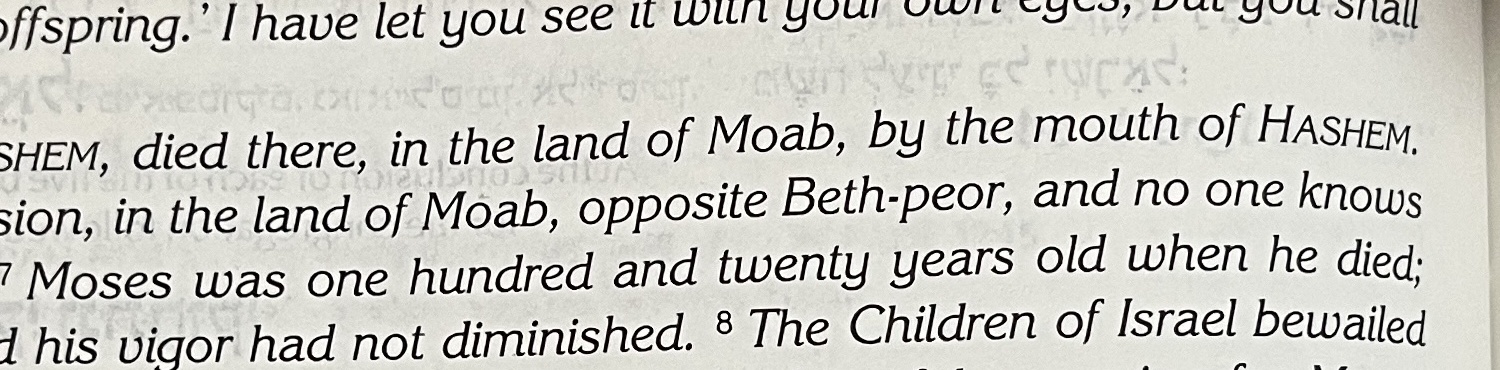
The most direct explanation for the customary wish is Moses. In Deuteronomy 31:2, he announces that he is 120 years old. Three chapters later, the Torah records his death at that age and adds that his eyesight and vitality had not failed. The portrait joins extraordinary longevity with continued vigor.
That second detail matters. The usual explanation of “until 120” is not simply that Moses reached an impressive age. His lifespan offers an image of a full life. The wish borrows that image rather than selecting the largest number available in the Torah.
The rabbinic pattern
One age, four lives
Sifrei Devarim, an early rabbinic collection interpreting Deuteronomy, identifies four figures who reached 120. They are Moses, Hillel the Elder, Rabban Yohanan ben Zakkai, and Rabbi Akiva. The collection presents their lives in stages of forty years. Moses spends forty years in Egypt, forty in Midian, and forty leading Israel.
The Babylonian Talmud gives Yohanan ben Zakkai’s life a particularly memorable structure. He spent forty years in business, forty years studying, and forty years teaching. His 120 years become an account of changing roles rather than just a total at the end of a biography.
Read together, these traditions suggest why 120 has such resonance. It is not merely an unusual age attached to one biblical figure. It becomes a way of linking exemplary lives, with room for preparation, learning, and responsibility. The age works as a portrait of a life rather than merely its final statistic.

Back in the classroom, Asher offered his own way of reading the ages. “Maybe it just seemed like they lived that long,” he said, “because they lived such good lives, and did so many wonderful things in their life.”
The class had started by asking how years were counted. His answer shifted the question to what those years contained.
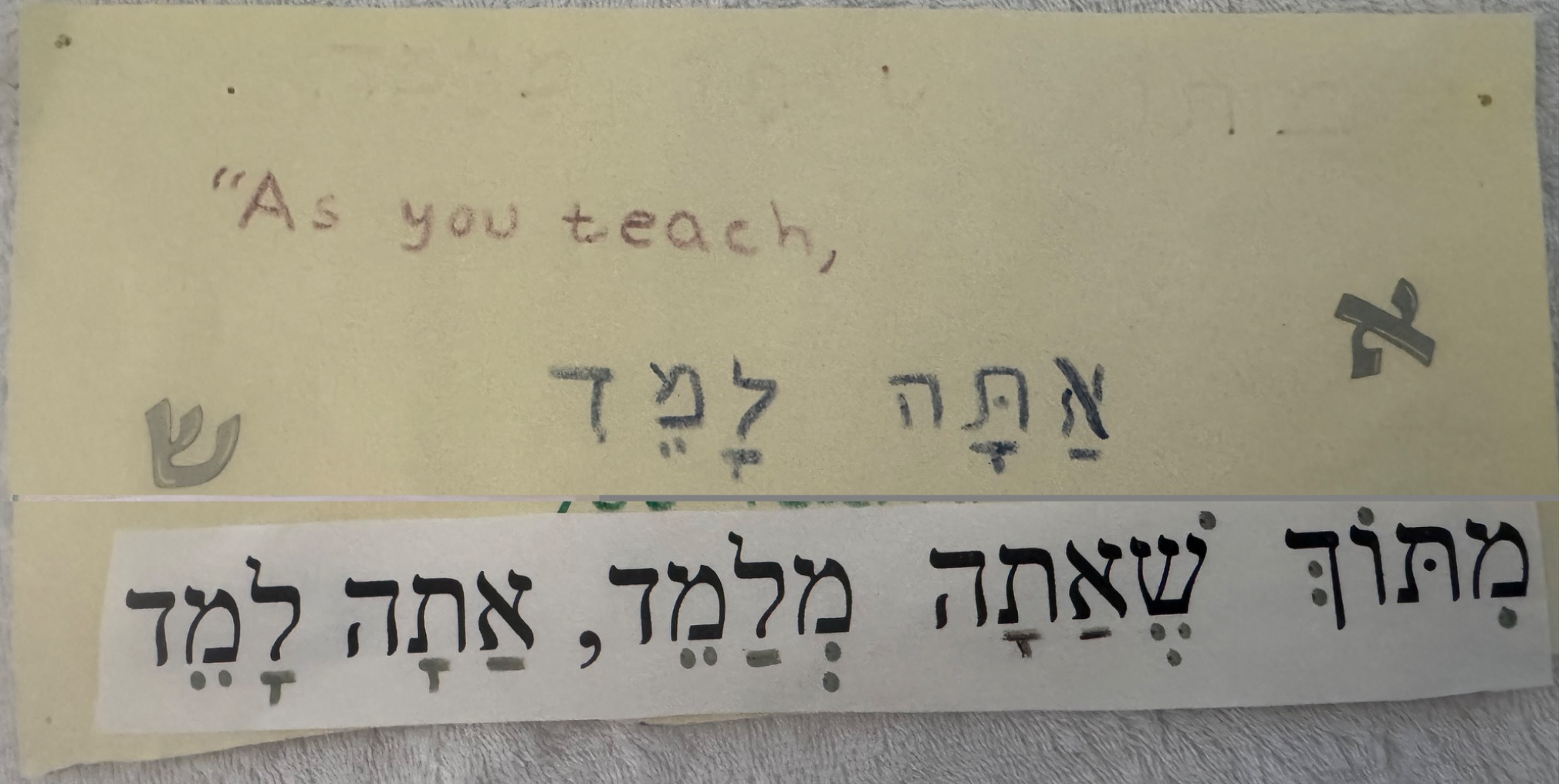
A handmade sign in my classroom says, “As you teach, you learn.” The Talmud captures a similar idea in Taanit 7a. Rabbi Hanina says that he learned from teachers and colleagues, but most of all from his students. The classroom is another place where inherited words acquire new voices.
From text to conversation
An early written blessing
One documented nineteenth-century example appears in a Menorat HaMaor printed in Slavuta in 1824. An ownership inscription attributed to the Polish rabbi Abraham of Ciechanów names his mother, Rada, and wishes that she live “until one hundred and twenty years.” The book’s printing date and her reported death in 1848 suggest that the inscription falls between those years.
The setting is telling. This is not a sermon about Moses, but a son writing his mother’s name in a book. The number has become part of the language of affection. Today, it can sit just as naturally in a birthday greeting or an English conversation about a relative’s age.
Rabbinic correspondence helps show when the number began to move from textual symbolism into everyday blessing. Responsa literature consists of written exchanges addressing questions of Jewish law. By the eighteenth century, responsa include language wishing someone life “until 120.” This suggests that the expression was already becoming part of Jewish written culture.
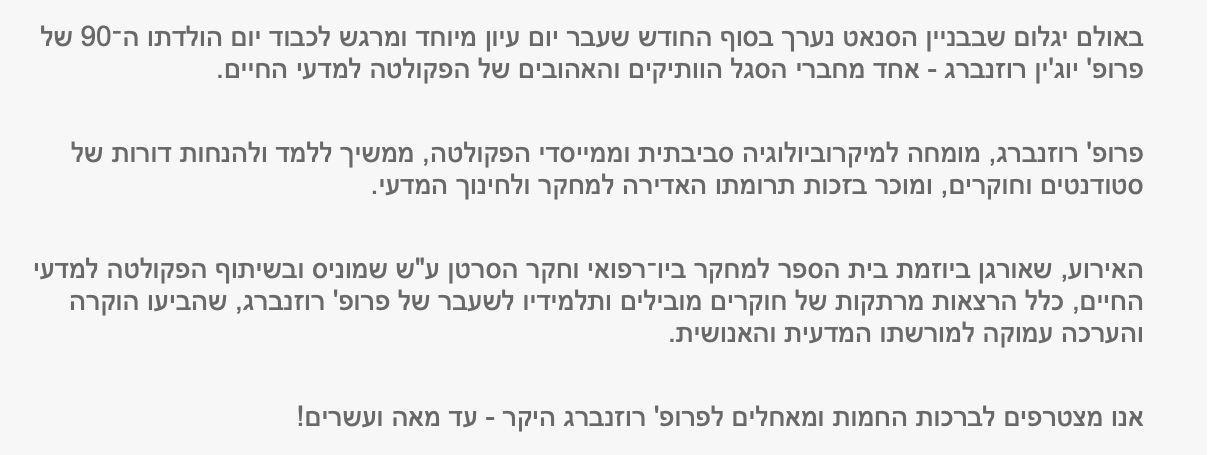
The phrase has not remained tucked away in old books. It continues to appear in contemporary Israeli life. In 2025, Tel Aviv University’s Faculty of Life Sciences ended a birthday tribute to Professor Eugene Rosenberg on his ninetieth birthday with the words ad me’ah ve-esrim. It is a reminder that the expression is still living, recognizable Hebrew.
The life of Sarah
Two years after our classroom discussion, I stood on the bimah at Asher’s bar mitzvah. Representing the temple’s Board of Trustees, I was there to present his certificate and kiddush cup after his Torah and haftarah readings. His Torah portion happened to be Chayei Sarah, “The Life of Sarah.”
The portion opens by recording Sarah’s 127 years and her death. Even its title places life at the center of a passage about dying. Rashi also comments on the verse’s concluding words, “the years of the life of Sarah.” He writes that her years were “all of them equally good.” The biblical text gives us an age, while the commentary asks us to think about the quality of those years.
Sarah’s 127 is not the source of the 120-year wish. But her place in Asher’s story brings us back to a similar idea. An age tells us how long someone lived. It does not tell us what kind of life they lived.
I shared the classroom exchange with his family and the congregation. Then I turned to him and said, “And may you, Asher, live a long life by your own definition. You’re going to live a good life filled with many wonderful things.”
So perhaps we are all capable of living “long lives,” measured not by how many years we live, but by how we live those years.
The next time a birthday gives you a reason to say ad me’ah ve-esrim, there is no need to explain all of the history behind it. But knowing the tradition behind the phrase makes the wish more than an unfamiliar number. It is a small piece of joyful Jewish culture you can put back into conversation.
Until 120, and may there be plenty to celebrate along the way.
Authors
About the authors

Bob Canter
JJEW.com Contributing Author
Bob Canter is President of the Brotherhood at Temple Israel of Tallahassee and previously served for more than 13 years as President & CEO of the Emeryville Chamber of Commerce in California. He has taught Hebrew and Jewish studies through Temple Israel’s Block Family Religious School and adult-education programs. His academic background includes degrees from the University of Maryland and George Washington University.

Noah O’Brien
JJEW.com Executive Editor
Noah O’Brien is Executive Editor of JJEW.com. He serves on a Jewish Cemeteries of Greater Cincinnati board committee and has helped facilitate capital improvements supporting Jewish historic preservation and public education. He is President of the Board of Directors of the Lloyd Library & Museum and Technical Director at Design for X. His academic background includes degrees from Ohio University and Youngstown State University.