Jewish Culture
Betar: The Return of Jabotinsky in Modern Jewish Culture
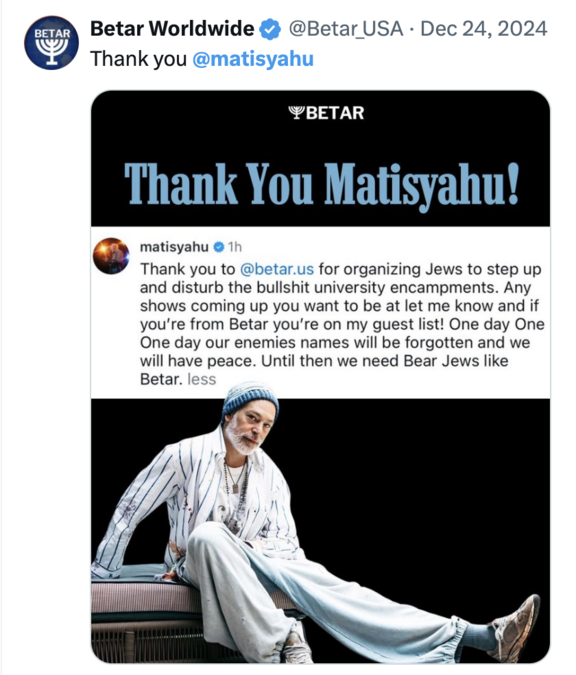
Matisyahu wearing a Betar shirt is the manifestation of a significant vibe shift in American Jewish culture. It is worth taking a closer look at this trend and the impetus behind it.

In February 2025, I saw a video of Matisyahu at a private event wearing a Betar shirt. This curious sight was the manifestation of a significant vibe shift in American Jewish culture. If you were raised in a secular or Reform Jewish household in the United States, there’s a good chance you would not recognize the name and logo on his shirt. Americans with a deeper knowledge of Jewish and Israeli history have some awareness of Betar, but generally view it negatively for its association with Jabotinsky and perceived militant nationalism. So why is this famous musician—known for lyrics imagining that “our children will play… one day”—wearing a Betar shirt?
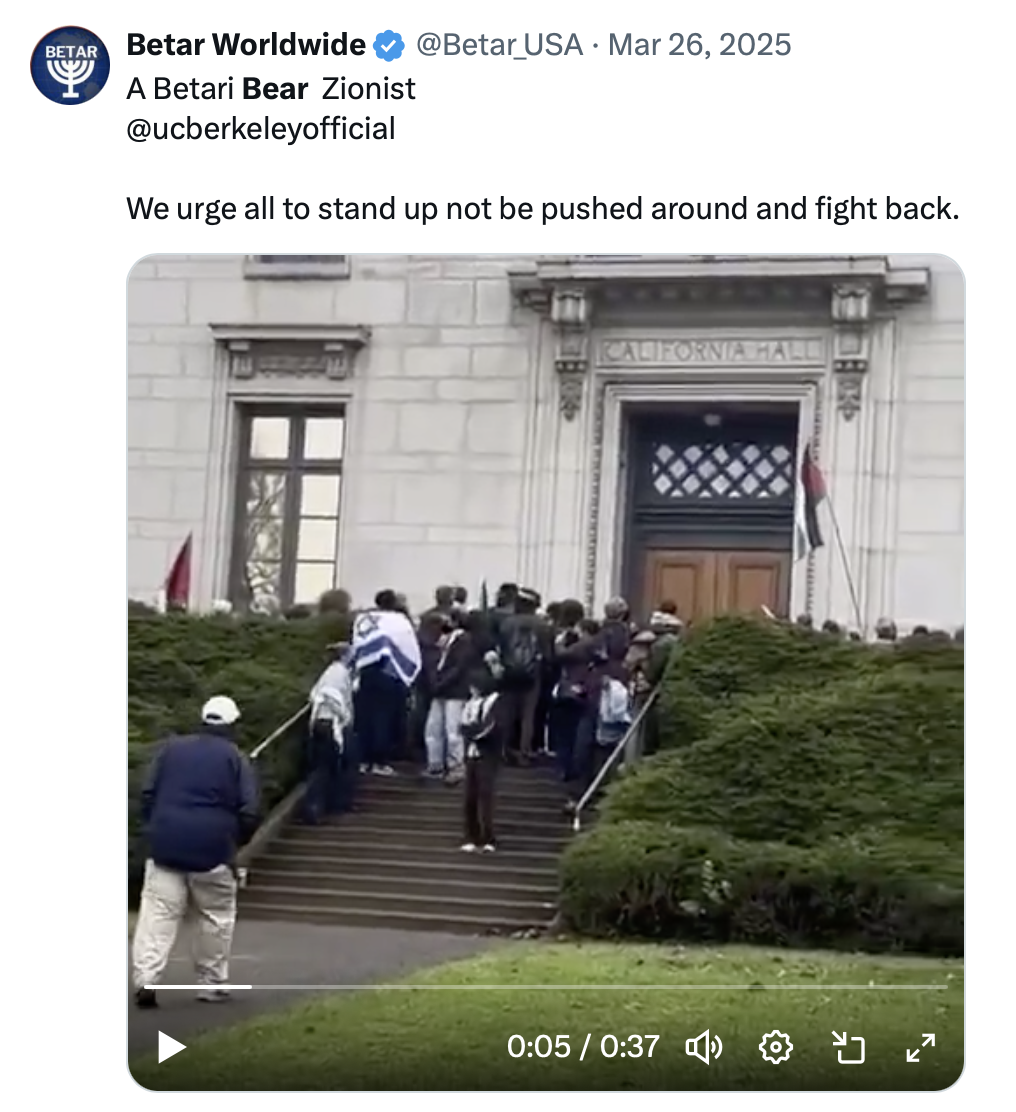
The answer is simple: October 7. After that tragic day, there were grotesque public displays of hatred toward Jews across American college campuses and in large cities like New York City. There were countless attacks on Jewish students, communities, communal spaces, restaurants, and other businesses. The climate became untenable, and a renewed embrace of Jabotinsky’s strong self-defense movement was inevitable. It almost felt therapeutic to see the videos emerging on social media of “Betar Bears” fearlessly standing up to the lunatic pro-Hamas mobs in the street.


Here’s where the story gets complicated. Betar and the Irgun (Etzel) were intertwined in their efforts to violently end British rule, defy immigration quotas for Jewish refugees, and obtain independence. David Ben-Gurion classified the group as “an enemy of the Jewish people.” The Jewish Agency, the de facto Jewish government led by Ben-Gurion during the British Mandate period, publicly referred to the group as terrorists—and even bombed a ship delivering their weaponry.
Jewish education in America often portrays Ben-Gurion and the Haganah as heroes while Jabotinsky and the Irgun are depicted as extremists who embraced unethical tactics. Pride is taken in the fact that the “good side” won the internal conflict and the Irgun and its strain of militancy were relegated to the dustbin of history. That oversimplification is quite common in the United States. That’s why it’s noteworthy to see a mainstream superstar like Matisyahu wearing a Betar shirt.
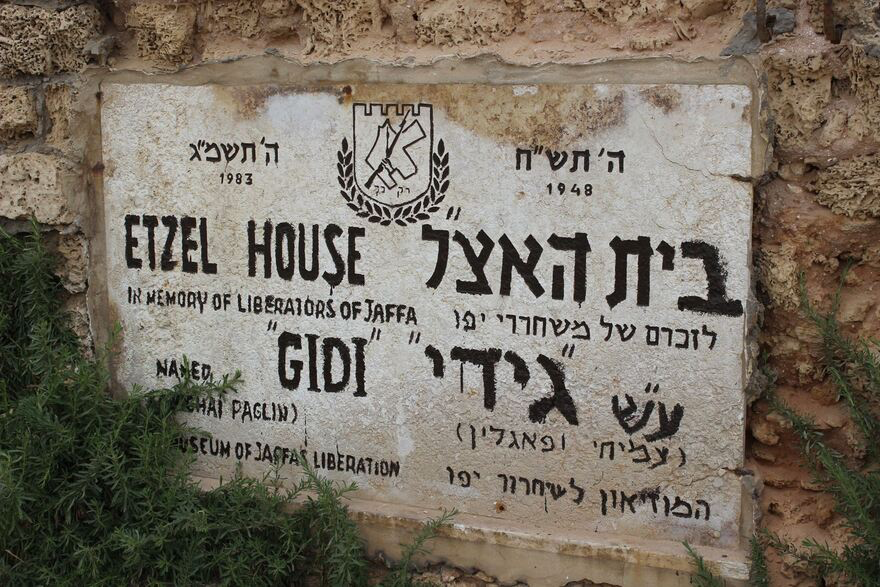
If you spend time in Israel, you’ll quickly realize that the legacy of Jabotinsky and his movement is much more nuanced. Ten years ago, I was walking from Jaffa to the beach in Tel Aviv and stumbled upon a building that served as a museum for the Irgun (Etzel) to honor their memory and contributions. There are dozens of streets, parks, and squares named after Jabotinsky throughout the country. My Israeli stamp collection even has a set issued in 1978 to commemorate 30 years of independence featuring both Ben-Gurion and Jabotinsky.

The Betar branch in the United States has been strongly embodying Jabotinsky’s sentiment that “We were not invented to teach morals to our enemies.” Jewish survival requires strength, deterrence, and sovereignty—not suicidal empathy and moral persuasion for existential threats. It’s through that lens that they unapologetically put out the same belligerent energy that’s been directed toward all Jews. They are quite comfortable fighting fire with fire.
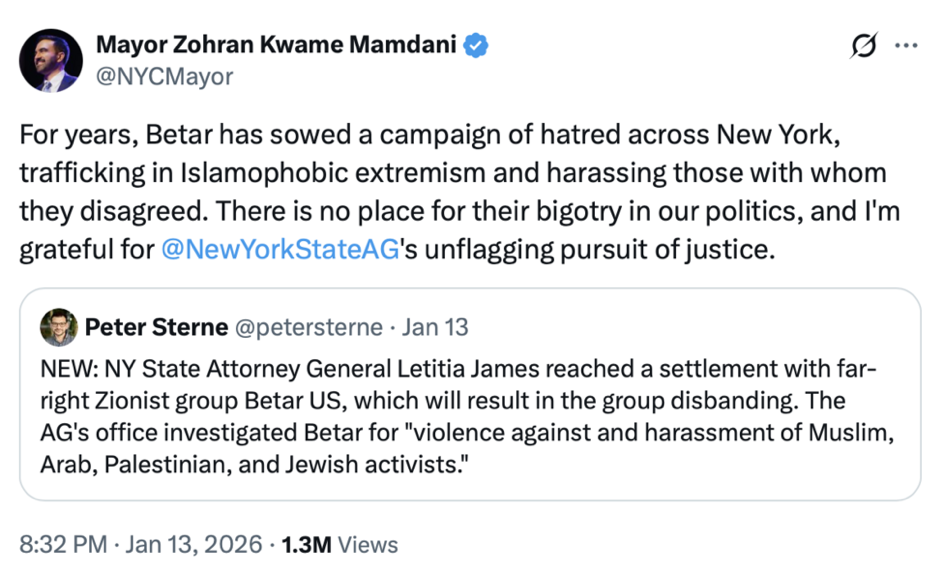
The Betar brand received a mega awareness boost in the United States this month. On January 13, 2026, Mayor Mamdani tweeted “Betar has sowed a campaign of hatred across New York … and I’m grateful for @NewYorkStateAG’s unflagging pursuit of justice.” This was in response to the announcement that NY Attorney General Letitia James reached an assurance of discontinuance for Betar to dissolve its non-profit incorporation in the state of New York. This simply resulted in Betar’s legal incorporation being relocated to Delaware—while further illustrating the double standard to which they are held.
Jabotinsky understood that joy was a foundational component to strength, dignity, and resilience. He wrote, “Tell them three things in my name, and not two: they must get iron; they must choose a king; and they must learn to laugh.” People will debate the tactics of Betar, and some will attempt to ostracize them. But this reemergence of Jabotinsky in contemporary Jewish culture happened for a reason.
Learn more: Betar Worldwide